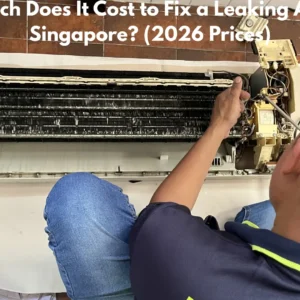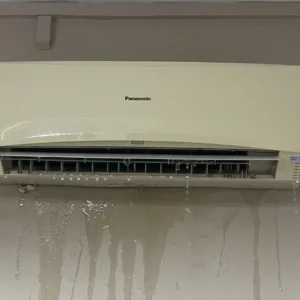
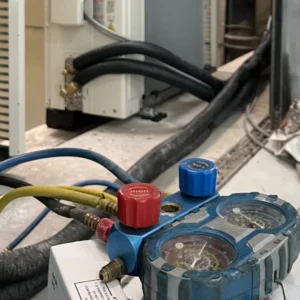
Decom Aircon technician performing aircon gas top up Singapore with manifold gauge on outdoor compressor

The Complete Guide to Aircon Gas Top-Ups in Singapore (2026)

Published by: Mr. Jarreth, Director Technician at Decom Aircon 25+ years of field experience servicing HDB, condo, and commercial cooling systems across Singapore.

When your unit stops cooling and just pushes warm, stale air around the room, your first instinct is to find a quick fix. You grab your phone and search for an aircon gas top up Singapore service to get things sorted.

The reality is that most contractors skip. Pumping fresh gas into your system without finding out exactly why it ran low is a waste of money. It guarantees you will be dealing with the exact same problem in two months.

At Decom Aircon, we have spent 27 years fixing cooling systems from Tampines housing estates to Orchard Road offices, and we see this exact cycle play out every week. Let’s break down what you actually need to know. This guide walks through what a refrigerant recharge really does, the four physical signs your system is losing pressure, how R32 differs from R410A, and the precise diagnostic steps a real technician takes before adding a single drop of gas.

What Does an Aircon Gas Top-Up Actually Do?

Refrigerant gas is the heat-transfer medium inside your cooling system. It travels continuously through a sealed, pressurized loop shifting rapidly between liquid and gas states to pull thermal energy out of your room and exhaust it outside through the compressor unit on your aircon ledge. The cycle follows a strict path:

1. The refrigerant absorbs heat at the indoor evaporator coil, cooling the air blowing into your room

2. It travels to the outdoor compressor, where it is pressurised

3. It releases that absorbed heat at the outdoor condenser

4. It passes through an expansion valve, rapidly cooling down and starting the cycle again

Without the precise mass of refrigerant your manufacturer specifies, this thermodynamic loop breaks down. The blower fan will still push air across the room you’ll hear it running but no real heat exchange is happening. You’ve got an expensive, wall-mounted fan.

A properly executed top-up restores the correct mass of refrigerant in grams, bringing internal pressures back to factory baseline so the equipment can cool your room efficiently without straining the compressor.

The two refrigerants you’ll encounter in Singapore residential units are R32 and R410A. The specific chemical determines the operating pressure, efficiency, and hardware requirements of your entire system. We’ll cover the critical differences between them shortly.

4 Signs Your Aircon Is Running Low on Gas

Catching a refrigerant deficit early prevents catastrophic compressor failure and keeps repair costs manageable. Watch for these four distinct warning signs.

1. The Air Blowing Out Is Room Temperature

This is the most common symptom, and the one that prompts most Singapore homeowners to pick up the phone.

Reduced refrigerant volume directly reduces heat-exchange capacity. When chemical levels drop below the factory threshold, the evaporator coil can’t absorb enough thermal energy from the room. The blower fan ends up pushing out lukewarm, ambient air instead of cold air.

If your unit is running on its lowest temperature setting and still can’t cool the room down, this isn’t a thermostat issue it’s almost certainly a refrigerant pressure problem. The first thing our technicians do when a customer reports their aircon is not cold is attach a manifold gauge to confirm system pressure before doing anything else.

2. Ice Forming on the Evaporator Coils

This one catches homeowners off-guard. Surely ice forming inside the unit means it’s working too well, right?

The opposite is true. When refrigerant levels drop severely, the remaining gas operates at abnormally low pressure, causing its temperature to plummet below the room’s dew point. Ambient moisture in the air condenses and freezes directly onto the metallic aluminum fins inside your indoor unit.

Many homeowners notice this when they lift the front cover to clean the filter a thick block of white ice covering the evaporator fins, or heavy water dripping onto the floor. The ice block is actually preventing airflow through the coil entirely. The system is suffocating, and the ice is the symptom, not the solution.

Ice forming on aircon evaporator coils inside HDB unit indicating low R32 refrigerant gas pressure Singapore

What to do: Switch the unit off immediately and let it defrost for at least two hours before calling for a pressure check.

After defrosting, if you notice aircon leaking water heavily from the indoor unit, the drainage pipe may also be blocked a separate issue we cover in detail.

3. Hissing or Bubbling Sounds from the Unit

A healthy aircon runs with a quiet, steady hum. If you start hearing a distinct hissing or bubbling noise coming from the indoor fancoil or the outdoor compressor on your ledge, treat it as an urgent red flag.

These sounds specifically indicate refrigerant escaping through a compromised point a hairline crack in the copper piping, a loose flare joint, or a degrading valve seal. You’re not dealing with a slow, microscopic loss that occurred over years. You’re dealing with an active, aggressive refrigerant leak that needs to be located and sealed before any top-up is performed.

4. Your Electricity Bills Are Creeping Up

A system starved of refrigerant has to work overtime trying to reach the target temperature on your remote. Because its cooling capacity is compromised, the compressor runs continuously without ever cycling off drawing maximum electrical current for hours on end.

If your monthly SP Services bill is noticeably higher despite no change in your usage habits, and your aircon is struggling to maintain temperature, the two symptoms are almost certainly connected. Every day the underlying leak goes unrepaired, that electricity cost compounds.

R32 vs R410A: Understanding What’s Running Through Your Pipes

Not all refrigerants operate under the same parameters. Knowing which chemical runs through your copper piping matters for efficiency, safety compliance, and servicing cost.

PropertyR410AR32
Global Warming Potential (GWP)2,088675
Ozone Depletion PotentialZeroZero
Energy EfficiencyBaseline~10% more efficient
Operating PressureSlightly lowerSlightly higher
Current Status in SingaporeBeing phased downIndustry standard
FlammabilityNon-flammableMildly flammable (A2L class)
Typical Charge Weight (2-room HDB)~600–800g~400–600g
R32 vs R410A refrigerant comparison chart Singapore showing GWP efficiency and phase-down status
R32 vs R410A refrigerant comparison chart Singapore showing GWP efficiency and phase-down status Chinese version

Note: R32 operates at marginally higher pressure than R410A (roughly 2–3% higher at equivalent conditions), which is why R32-rated manifold gauges and copper fittings are specified for R32 systems. In practice, the difference is small enough that both refrigerants use similar piping specifications.

R32: The Current Standard

R32’s GWP is 68% lower than R410A a significant environmental advantage that has made it the mandatory choice for all new residential installations across Singapore. If your unit was installed after 2018, it almost certainly runs on R32. If you’re planning a new setup for your BTO, see our BTO aircon installation packages all new systems we install run on R32 as standard.

The A2L “mildly flammable” classification is worth understanding. R32 requires a higher concentration in a confined space to combust than petrol fumes or LPG, and it needs an ignition source. In real-world residential conditions with proper installation, the risk is negligible. Decom Aircon technicians follow NEA-aligned safety protocols when handling, recovering, and recharging R32 systems.

R410A: Being Phased Down

Under Singapore’s commitments to the Kigali Amendment, the NEA is actively phasing down high-GWP refrigerants including R410A. If your system runs on R410A, it can still be serviced but the chemical will become progressively scarcer and more expensive as the phase-down accelerates through 2026 and beyond.

What About R22 (Freon)?

R22 is entirely banned for new installations in Singapore and has been for years. If you’re still running an R22 system, you’re using equipment that is genuinely at end-of-life from a serviceability standpoint. At Decom Aircon, we’ll always recommend retrofitting or replacing rather than continuing to service a legacy R22 unit.

To check which refrigerant your system uses: Walk out to your aircon ledge and find the manufacturer’s metallic data sticker on the side of your outdoor compressor. It will state the refrigerant type and the exact factory-specified charge weight in grams.

The Biggest Myth in Singapore Aircon Servicing

There is a damaging misconception that aircons use up their refrigerant gas naturally over time the way a car burns through engine oil or a tyre loses air pressure through the rubber.

This is incorrect. A properly installed, sealed aircon never needs its gas topped up.

The refrigerant cycles endlessly through a vacuum-sealed loop of copper piping and brass fittings. Unlike rubber, copper does not allow gas to permeate through its walls. The only way gas escapes is through a physical hole: a cracked flare joint, a loose valve, damaged copper, or a manufacturing defect.

If a contractor tells you your aircon needs a routine gas top-up without first running a pressure test and finding a leak, you are being told something that is not technically accurate. And you’re being set up to pay for the same service again in a few months once the new gas escapes through the same unrepaired hole.

A gas top-up without a leak repair is not a solution. It is a temporary patch on a permanent problem.

At Decom Aircon, our policy is straightforward: we run a full pressure diagnostic first. If the pressure is fine, you don’t need a top-up and we’ll tell you so book a pressure check. If pressure is low, we find and fix the leak before anything else.

How Decom Aircon Handles a Refrigerant Service

When you call us out for a gas-related issue, this is the exact process our technicians follow.

Step 1: Visual Inspection for Oil Staining

We begin with a methodical inspection of all exposed copper piping, flare joints at the indoor units, and service valves at the outdoor compressor. Refrigerant carries compressor oil as it circulates, so an oil stain on a pipe or fitting is a reliable indicator of an escape point. This visual sweep often locates the leak before we even connect a gauge.

Step 2: Manifold Gauge Pressure Test

We attach a professional manifold gauge set to the service port on your outdoor unit. This gives us real-time high-side and low-side pressure readings, which we compare against the manufacturer’s exact specifications for your specific R32 or R410A system.

Manifold gauge pressure test on aircon outdoor unit checking R32 refrigerant levels Singapore

Abnormal readings immediately tell us:

  • Whether the system is genuinely low on refrigerant
  • Whether it’s been overcharged from a previous careless service (also harmful to the compressor)
  • Whether there’s a mechanical blockage in the expansion valve unrelated to gas level

Step 3: Electronic Leak Detection

Refrigerant leaks cannot be reliably located by feel or smell. We sweep the full length of exposed copper lines with an advanced electronic leak detector calibrated to pick up specific chemical molecules at trace concentrations.

For pinpoint accuracy around flare joints where leaks most commonly originate we follow up with a soapy water test. Pressurised gas escaping through a micro-crack produces visible, persistent bubbling even when the leak is too small to hear.

Step 4: Leak Repair

Once the exact point is identified, we repair it. This typically involves re-flaring a faulty joint, applying specialised copper repair compounds, or replacing a section of damaged piping. The repair is pressure-tested before we move to the next step.

No competent technician adds refrigerant over an unrepaired leak.

Step 5: Vacuum and Purge

After the repair, we attach a vacuum pump to the circuit and run it until the system reaches a deep vacuum. This step is non-negotiable.

When a system is opened even briefly ambient air and moisture enter the copper lines. If left inside, moisture mixes with refrigerant and compressor oil to form acidic compounds that will gradually destroy your compressor’s internal windings. Vacuuming extracts every trace of air and moisture before the fresh refrigerant is added.

Decom Aircon technician vacuuming and recharging aircon refrigerant with digital scale Singapore

Step 6: Weighed Refrigerant Recharge

We charge your system using an electronic digital scale, measuring the refrigerant in grams against the exact factory specification printed on your outdoor unit’s data sticker.

We do not use the outdated “pressure feel” method adding gas until the gauge looks right. Under- or over-charging by even 10% affects efficiency and compressor lifespan significantly. Weighed charging is the only correct approach.

We finish by running the system at full capacity for 10–15 minutes and measuring the temperature differential between return air at the ceiling and supply air at the grille, confirming your room is getting genuinely cold again before we leave.

How Much Does an Aircon Gas Top-Up Cost in Singapore?

For a standard residential aircon gas top-up in Singapore in 2026, expect to pay between $60 and $150 per system, depending on:

  • System size (single split vs. multi-split)
  • Refrigerant type (R32 is slightly more expensive per kg than legacy R410A stock)
  • Scope of leak repair required

This price should always include the pressure diagnostic and at minimum a leak check. A quote that’s significantly cheaper than this range typically reflects a service that skips the diagnostic and adds gas without finding the leak which will cost you more over time, not less.

For transparent pricing across all our services including aircon servicing contracts, hydro Service, and installation packages, visit our pricing page or WhatsApp us directly for a specific quote based on your unit setup.

Frequently Asked Questions: Aircon Gas Top-Up Singapore

Do I need to top up aircon gas regularly?

No. A correctly installed, leak-free aircon never needs its gas topped up. The refrigerant circulates indefinitely in a sealed copper loop. If your unit needs a top-up, it has a leak that must be found and repaired. Routine servicing every 3–4 months addresses filter cleaning, drainage, and cooling performance checks but gas top-ups are only necessary when a leak has been confirmed.

How much does an aircon gas top-up cost in Singapore?

Between $60 and $150 for most residential systems in 2026. The correct service includes a pressure test, leak location, repair, vacuum purge, and weighed recharge. If a quote doesn’t mention any of these steps, ask why.

Can I keep using my aircon if it’s low on gas?

No switch it off immediately. Running a system with low refrigerant forces the compressor to work without adequate lubrication and at temperatures it isn’t designed for. This causes irreversible mechanical damage. A failed compressor typically costs $400–$800+ to replace, far more than a timely refrigerant service. For a full breakdown of what repairs cost if the compressor is damaged, see our guide on how much a compressor repair costs in Singapore.

How do I know if my aircon uses R32 or R410A?

Check the manufacturer’s data sticker on the side of your outdoor compressor unit. It clearly states the refrigerant type and the factory-specified charge weight in grams. If you can’t read it, our technician will check it on arrival before connecting any equipment.

Is R32 safe to use in a Singapore HDB or condo?

Yes. Despite its A2L mildly flammable classification, R32 is globally approved and operates safely in millions of residential properties. The conditions required for it to combust are not present in a normally functioning home installation. All Decom Aircon technicians are trained to NEA-aligned handling and recovery standards for R32 systems.

How long does the full service take?

A proper comprehensive service pressure test, leak location, repair, vacuum, and weighed recharge takes roughly 90 minutes to two hours. Any service completing in under 30 minutes has skipped critical steps.

My aircon was just serviced last month why is it low on gas again?

Almost certainly because the gas top-up last month was done without repairing the underlying leak. The same hole that let the previous charge escape has let this one escape too. This is the most common reason we see repeat calls for the same problem. We always repair first, recharge second.

Why Singapore Homeowners Choose Decom Aircon

Decom Aircon has been servicing cooling systems across Singapore since 1997, 27 years of HDB flats, condominiums, landed properties, and commercial spaces. Our address is 3026 Ubi Road 1, Singapore 408719, and our technicians are island-wide.

We operate on a diagnostic-first principle because it’s the only approach that actually solves the problem permanently. We’re not interested in collecting payment for a band-aid that guarantees you’ll call again in eight weeks.

When our technician arrives at your property, you get an honest assessment of exactly what your system needs and what it doesn’t. If the gas pressure is fine and the real problem is a dirty coil or blocked drainage, we’ll tell you that and fix that instead.

Paying for new gas without repairing the underlying leak is like pouring water into a bucket with a hole in the bottom. It feels like progress, but you’re right back where you started. Real technical solutions require the right diagnostic tools, a methodical repair process, and a contractor who is more interested in fixing your problem than billing for a quick return visit.

Whether you need a gas service, routine maintenance, or an aircon relocation service for a renovation or move, our island-wide team handles the full scope.

Don’t just top up the gas. Find the leak first.

🔧 Book a Pressure Check with Decom Aircon
💬 WhatsApp Us: 9236 8733
📞 Call: 6743 0889

Decom Aircon Singapore’s trusted aircon servicing specialists since 1997. Serving all HDB estates, condominiums, landed properties, and commercial spaces island-wide.

Aircon technician toolkit with price notepad showing Singapore repair costs in SGD 2026

How Much Does It Cost to Fix a Leaking Aircon in Singapore? (2026 Prices)

Fixing a leaking aircon in Singapore typically costs between $60 to $100 for a standard drainage pipe flush. If the unit needs a hydro service (deep cleaning), prices typically range from $60 to $150 depending on condition.. Replacing worn-out Armaflex insulation on trunking starts from $150. A full Hydro overhaul runs $180 to $250. Ceiling cassette units in offices generally cost 30% to 50% more than standard HDB wall-mounted units for the same type of repair.

Most Singapore homeowners only discover what an aircon repair costs at the worst possible moment. You’re standing in a puddle at midnight, calling whoever picks up first.

That is exactly when you are most likely to overpay.

This guide breaks down every common leaking aircon repair by fault type, with Decom Aircon’s 2026 pricing and the specific factors that push costs up or down so you know exactly what a fair bill looks like before anyone shows up at your door.

Why You Shouldn’t Overpay for a Leaking Aircon Fix

Here is something most aircon companies will not tell you: the majority of water leaks in Singapore come down to a single, inexpensive fix a blocked drainage pipe. The average cost to clear a clogged aircon drainage pipe in a Singapore HDB flat is $60 to $100. Full stop.

The problem is that without knowing the price landscape, it is easy to be quoted $150 for a “full service” when all your unit actually needed was a 20-minute vacuum clearance.

Understanding what each repair involves and what it should cost is the best protection you have against inflated bills and unnecessary upsells.

Cost Breakdown 1 Standard Drainage Pipe Flush ($60–$100 per unit)

This is the most common fix for a leaking aircon in Singapore, and also the most straightforward.

What it involves: A technician connects an industrial wet/dry vacuum to the external drainage pipe outlet and pulls the blockage out from the exit end. The entire process takes 20 to 30 minutes per unit. No dismantling. No chemicals. No mess beyond what is already there.

What it fixes: The thick, translucent, brownish sludge that builds up from algae and condensation that builds up inside PVC drainage pipes over months of use. Once the pipe is clear, water flows freely again and the leak stops.

What you should pay at Decom Aircon: $60–$100 per unit.

When this is not enough: If the fan coil itself is heavily coated with grime, clearing the pipe alone will not resolve the leak permanently. The dirt will continue shedding into the pipe and create a new blockage within weeks. In that case, the unit needs a hydro service.

Technician connecting industrial vacuum hose to aircon PVC drainage pipe exit on Singapore HDB flat wall

💬 Not sure if your unit needs a flush or a full wash? WhatsApp us your unit brand and when it was last serviced we’ll give you an honest answer before you book.

Cost Breakdown 2 Hydro service & Clearance ($60–$150 per unit)

A hydro service is the next step up when the drainage blockage is a symptom of a dirtier underlying problem.

What it involves: The technician removes the front casing and fan coil cover. Specialised alkaline solution is applied directly to the aluminium evaporator fins to dissolve hardened grime, kill bacteria colonies in the drain pan, and flush the entire drainage path clean. The pipe is then vacuumed at the exit to remove everything that has been loosened.

What it fixes: Heavy dust buildup on the fins that restricts airflow, bacterial growth in the drain pan causing recurring jelly formation, and drainage blockages that keep coming back every few weeks despite regular flushing.

What you should pay at Decom Aircon: $60–$150 per unit.

The most important thing to check: A hydro service that does not include a drainage line vacuum at the end is an incomplete job. The Hydro solution breaks down the dirt but that dirt still needs to be pulled out. Any technician who skips the vacuum is leaving loosened debris inside your pipe where it will compact into a new blockage within days.

When to choose this over a basic flush: If your unit has been leaking repeatedly despite recent servicing, if it has not been hydro cleaned in over a year, or if the air coming out smells musty even with clean filters.

Standard servicing every three months covers basic cleaning and drainage maintenance. A hydro service is a deeper cleaning process recommended when heavy buildup is present or when leaks keep returning.

Cost Breakdown 3 Replacing Damaged Insulation and Trunking ($150–$200)

This is the fix that catches most homeowners completely off guard because the leak is not coming from the unit at all.

What it involves: Your aircon’s refrigerant pipes and drainage pipe run through insulated trunking typically wrapped in a foam material called Armaflex. Over time, this insulation degrades, compresses, or develops gaps. When that happens, the cold copper pipes inside the trunking cause condensation to form on the outside of the casing, and that condensation drips down your wall and looks exactly like a leak from the indoor unit.

Replacing worn-out Armaflex insulation is required when water condensation forms on the exterior of the aircon trunking rather than from the unit itself. The technician strips out the old insulation, replaces it with fresh Armaflex along the affected run, and reseals the trunking.

What you should pay at Decom Aircon: $150–$200 depending on the length of trunking affected.

How to tell if this is your problem: Run your hand along the trunking on the wall. If the outer casing feels cold and damp to the touch, or you can see moisture forming on the trunking surface rather than dripping from the unit itself, insulation is the issue not the drainage pipe.

Aircon Trunking Condensation Singapore — Armaflex Insulation Failure

Cost Breakdown 4 Full Hydro Overhaul ($180–$250 per unit)

A hydro overhaul is the most comprehensive single-unit service available and it is the correct solution when a standard hydro service is not enough.

What it involves: The entire indoor unit is fully dismantled on-site. The fan coil, blower wheel, drain pan, and casing are removed and cleaned individually. The blower wheel which a standard a standard hydro service cannot properly reach is soaked and scrubbed to remove years of compacted dust from between the blades. Everything is reassembled, the drainage path is vacuumed clear, and the unit is tested before the technician leaves.

What it fixes: Units that have not been serviced in two or more years, blower wheels so clogged that airflow has dropped significantly, chronic leaking that has persisted through multiple standard washes, and units producing poor air quality or unusual smells.

What you should pay at Decom Aircon: $180–$250 per unit.

When this is genuinely necessary vs. an upsell: If a technician recommends a Hydro overhaul on a unit that was professionally serviced eight months ago, push back and ask why. A legitimate overhaul recommendation comes with a specific reason a visibly clogged blower wheel, a cracked drain pan that needs removal to replace, or a unit that has failed repeated standard services. If no specific reason is given, a hydro service is almost certainly sufficient.

Aircon Chemical Overhaul Disassembly Singapore — Blower Wheel Dust Buildup

Are Landed Property and Commercial Office Repairs More Expensive?

Yes and the reasons are specific, not arbitrary.

Landed properties tend to need more frequent drainage clearances than high-floor HDB units. Ground-floor units near foliage, gardens, or open drainage pull in significantly more organic matter pollen, leaf debris, insects which accelerates jelly formation in the pipes. Aircon units in landed properties typically require servicing every two months, compared to every three months for standard HDB units., which affects your annual maintenance cost rather than the per-visit price.

Ceiling cassette aircons the type found in most commercial offices, shophouses, and some larger condos generally cost 30% to 50% more to repair for leaks compared to standard HDB wall-mounted splits. The reasons are practical: cassette units are ceiling-mounted, require ladders or scaffolding to access properly, have more complex internal drainage systems with motorized pumps, and take significantly longer to dismantle and reassemble safely.

For commercial spaces, a leaking ceiling cassette also carries the added risk of water damage to office equipment, server rooms, or stock below. If you manage an office or retail unit, a preventive maintenance contract is almost always more cost-effective than emergency call-out rates.

💬 Running a commercial space? WhatsApp us about our commercial maintenance contracts fixed monthly rates with priority same-day response.

The Full 2026 Price Reference Table

Repair TypeWhat It FixesDecom Aircon Price
Drainage pipe flushJelly/algae blockage in PVC pipe$60–$100 per unit
Hydro service + clearanceDirty fan coil, recurring blockages$60–$150 per unit
Armaflex insulation replacementCondensation on trunking exterior$150–$200
Full Hydro overhaulSeverely dirty unit, clogged blower$150–$250 per unit
Gas top-up (refrigerant)Frozen coils from low gasQuote on inspection
Drain pan replacementCracked or rusted panQuote on inspection
Ceiling cassette leak repairOffice/commercial units+30–50% on above rates

Decom Aircon’s Transparent Pricing Guarantee

Every quote we give is itemized. You will know exactly what you are paying for before any work begins the specific fault, the specific fix, and the specific price.

We do not charge call-out fees for standard repair visits. We do not recommend Hydro overhauls when a flush will do the job. And we do not send a second technician mid-job to tell you the price has changed.

If you have been quoted a price elsewhere and want a second opinion, send us the quote on WhatsApp. We will tell you honestly whether it is fair.

Know what your repair should cost. Book with confidence. WhatsApp Decom Aircon now tell us your unit brand, property type, and the symptom, and we will give you an upfront price before we arrive.

Frequently Asked Questions

How much does it cost to fix a leaking aircon in Singapore?

In Singapore, fixing a leaking aircon typically costs $60 to $100 for a standard drainage pipe flush. If the unit requires a hydro service, the price ranges from $80 to $150. Replacing worn Armaflex insulation on the trunking starts from $150. A full Hydro overhaul runs $180 to $250 per unit. Ceiling cassette units in commercial spaces cost 30% to 50% more than standard wall-mounted splits for equivalent repairs.

Is a cheap $40 aircon service worth it?

Yes if the fault is a simple drainage blockage. A $60 to $100 drainage flush is a legitimate, complete service for that specific problem. The price is low because the job is straightforward and fast. It becomes a red flag only if a technician charges $40 for a “full service” and leaves without clearing the pipe properly or checking the fan coil condition.

Why does my aircon keep leaking after servicing?

The most common reason is that the drainage pipe was not vacuumed after the hydro service loosened dirt was left in the pipe and compacted into a new blockage within days. The second most common reason is that the fan coil was cleaned but the blower wheel was not, so dust continues shedding into the drainage system. Ask your technician specifically whether the drainage line was vacuumed at the end of the service.

Who is responsible if my leaking aircon damages my downstairs neighbour’s property?

You are, as the homeowner. Under HDB and NEA regulations, all internal aircon units and their drainage piping are entirely the flat owner’s responsibility. If your unit leaks and causes water damage to your neighbor’s ceiling, flooring, or belongings, you are personally liable for those repair costs. This is why addressing a leak quickly is not just about your own home.

Do I need a contract for regular aircon servicing in Singapore?

For most homeowners, a contract is worth it if you have two or more units. Contracts typically lock in lower per-visit prices, guarantee priority scheduling, and include reminders so maintenance never gets skipped. For commercial spaces with ceiling cassettes, a maintenance contract with a defined response time is strongly recommended.

All prices listed are Decom Aircon’s 2026 rates for residential units in Singapore. Commercial and ceiling cassette pricing is provided on inspection. WhatsApp us now for a transparent, itemised quote.

Wall-mounted aircon unit leaking water onto parquet floor in Singapore HDB bedroom at night

Aircon Leaking Water Right Now? Do These 4 Things Immediately (Singapore Guide)

Published by: Mr. Jarreth, Director Technician at Decom Aircon 25+ years of field experience servicing HDB, condo, and commercial cooling systems across Singapore.

There is a particular kind of panic that hits at 2 AM when you walk into your bedroom and hear dripping.

Not rain. Not a tap you forgot to close.

Your aircon.

And it is quietly destroying your parquet flooring while you stand there in the dark, wondering if you should be calling someone or just shoving a towel under it and going back to bed.

Here is the truth: that drip is not a minor inconvenience. In Singapore’s climate, a leaking aircon is your unit sending up a distress flare. Ignore it for a few days and you are looking at warped flooring, toxic mold in your walls, and potentially a $1,000 fine from the NEA.

But if you act fast? It is usually a straightforward fix.

This guide will walk you through exactly what to do right now, tonight, and over the next few days.

Water dripping from wall-mounted aircon unit creating wet patch on parquet floor in Singapore home

First Things First: Stop the Damage Before You Do Anything Else

Before you start googling causes or watching YouTube repair videos, protect your home.

Water and electricity are a dangerous combination, and your aircon has plenty of both.

Step 1 Cut the power properly. Do not just hit the remote. Walk to the isolator switch next to the indoor unit or flip the correct circuit breaker. If water reaches the main PCB (the aircon’s circuit board), what started as a $60 to $100 drainage flush can turn into a $300 to $500 motherboard replacement overnight.

Step 2 Move everything out of the way. Laptops, extension cables, rugs, wooden furniture get them away from the drop zone immediately. Your parquet floor is especially vulnerable. Water seeps under the planks fast, and once they start warping, there is no fixing it without full replacement.

Step 3 Catch the drip. Place a bucket directly under the unit. Press a thick, dry towel flat against the skirting board to stop water from tracking sideways. You are buying yourself time.

Step 4 Wipe the exterior only. A dry microfiber cloth on the plastic casing is fine. Do not open the front panel and start poking around the internals while they are wet. Leave the actual diagnosis to a technician.

Water already dripping down your wall? WhatsApp Decom Aircon now for same-day emergency response. We clear blockages fast.

Why Singapore Makes Aircon Leaks So Much Worse

This is not a coincidence. Singapore’s climate is brutal on air conditioning systems in a way that most homeowners do not fully appreciate.

Your aircon does two things simultaneously: cools the air and pulls enormous amounts of moisture out of it. On a typical Singapore day, a single bedroom unit can extract several liters of water from the air. All of that condensation has to drain somewhere through a PVC pipe that runs through your walls and out of the building.

When that drainage system works perfectly, you never notice it. When it fails, everything that water was supposed to carry away ends up in your room instead.

The high humidity also creates the perfect environment for the thing that blocks most Singapore drainage pipes: thick, translucent, brownish sludge that builds up from algae and condensation that technicians call aircon jelly. More on that in a moment.

5 Real Reasons Your Aircon Is Leaking Water

To fix this permanently, you need to understand what is actually going wrong inside the unit. Here are the five most common causes and how to tell which one you are dealing with.

1. Clogged Drainage Pipe (The Jelly Problem)

This is responsible for over 70% of aircon leaks in Singapore. Nothing else comes close.

Here is the science. Inside your aircon unit, it is dark, constantly damp, and cool. That environment is paradise for bacteria and algae. Every time your unit runs, it pulls in warm air from the room and with it, microscopic particles: dust, skin cells, fabric fibres, and more.

Over months, those particles mix with the condensation water and start to ferment. The result is a thick, translucent, brownish sludge that slowly builds up inside your PVC drainage pipe. Technicians see it every day. It looks like clear gel. It smells musty. And once it fully blocks the pipe, the water has absolutely nowhere to go.

So it backs up. Fills the internal drain pan. And then overflows directly into your room.

How to tell: The leak is usually steady and constant while the unit is running. You may also notice a faint musty smell coming from the unit.

Cross-section of a clogged white PVC aircon drainage pipe blocked by brownish algae sludge jelly in Singapore

2. Dirty Fan Coil and Filters

Your aircon needs airflow to function. It works by pulling warm room air over cold evaporator coils to cool it down and that process only works if air can actually move through the system freely.

When the filters and the delicate aluminum fins on the fan coil are choked with dust, airflow drops dramatically. The cold air gets trapped. The coils get colder and colder until without enough warm air to regulate the temperature the condensation on them freezes solid.

Eventually, either you switch the unit off or the ice gets too heavy. Either way, it melts fast. And the drain pan underneath was built to handle a slow, steady trickle of condensation, not a sudden flood of melting ice. It overflows.

How to tell: The unit runs fine for a while, then suddenly starts dripping heavily. You might also notice the aircon is not cooling as well as it used to.

3. Poor Installation or Bad Gradient

This one is more common in newer flats than most people realise.

The drainage pipe inside your wall needs to be installed at a specific downward angle called the gradient so gravity pulls the water out naturally. If the pipe was laid too flat, or (worse) tilted very slightly upward, the water pools instead of draining. Over time, it backs up and leaks.

We see this constantly in HDB BTO flats where the original contractors rushed the installation. It is not always obvious from the outside, but the problem is built into the geometry of the unit from day one.

How to tell: If your unit has been leaking on and off since the day you moved in, or you hear a soft gurgling sound while the unit runs, poor gradient is very likely the cause.

4. Cracked or Warped Drain Pan

Every indoor unit has a drain pan sitting underneath the evaporator coils. Its one job is to catch condensation and channel it into the pipe.

After five or more years of constant temperature fluctuations and thousands of litres of water, plastic pans warp and crack. Older metal pans rust straight through. Once the pan is compromised, water drips right through the base of the unit before it ever reaches the drainage pipe.

How to tell: The leak appears even when the unit has just been serviced and the drainage pipe is clear. The drip often comes from the very bottom edge of the unit casing.

5. Low Refrigerant (Gas Leak)

This one catches homeowners off guard because gas and water seem unrelated. They are not.

If your refrigerant level has dropped usually due to a slow leak in the copper piping the pressure inside the system drops with it. This triggers the exact same ice-and-melt cycle as a dirty coil. The evaporator freezes over, the ice melts too fast, the pan overflows, and water ends up on your floor.

How to tell: The unit is leaking water AND blowing air that is barely cool. Both symptoms together almost always point to a refrigerant issue.

HDB, Condo, or Landed? Your Environment Changes Everything

Where you live in Singapore directly affects how quickly your aircon drainage system clogs and how often it needs attention.

If you are on a high floor HDB unit and run the aircon mainly at night, a standard servicing schedule every three months is usually sufficient.

But if you live in a ground-floor condo, a terrace house, or a semi-detached near heavy foliage, an expressway, or an active construction site your unit is pulling in significantly more airborne particles every single day. Pollen, exhaust particulates, construction dust. All of it ends up in your drainage pipe.

For landed property owners: clear your drainage lines every two months, not four to six. What works for a 15th-floor HDB unit is not enough for a ground-floor landed house. The environment outside your window is simply too different.

What a Professional Fix Actually Looks Like

Aircon technician in navy uniform using industrial vacuum to clear blocked drainage pipe on Singapore HDB flat exterior

You can wipe up the water. You can rinse the user-accessible filters in your sink. These are fine habits.

But here is the problem with attempting more than that yourself: blowing air into a blocked drainage pipe one of the most common DIY attempts almost always pushes the jelly blockage deeper into your walls. What was a 20-minute vacuum job from a technician becomes an excavation of your plastered wall. It happens more often than you would think.

Here is how Decom Aircon actually resolves the problem:

High-Powered Vacuum Clearance Instead of pushing the blockage, we pull it out. Industrial-grade wet/dry vacuums applied directly at the drainage exit point suck the jelly, algae, and sludge clean out of the system. Most standard leaks are resolved in 20 to 30 minutes. The pipe is left completely clear.

Deep Hydro Flush For units where the fan coil is heavily choked with years of built-up grime, a vacuum alone will not be enough. A Hydro flush uses specialized alkaline solutions to dissolve hardened dirt on the aluminum fins, kill the bacteria in the drain pan, and restore proper airflow. Not every unit needs this but when it does, nothing else comes close.

Not sure whether you need a standard wash, a Hydro flush, or a full dismantle? Read our breakdown on Hydro Wash vs. Hydro Overhaul to understand exactly what each process does and when each one is necessary.

Correcting the Gradient If the inspection reveals a BTO installation gradient problem, we fix the geometry. That might mean adjusting the positioning of the fan coil unit or rerouting the PVC pipe to ensure water flows downward consistently. Clearing today’s blockage means nothing if the drainage path itself is the root cause.

No surprise bills. If you want to know exactly what you should be paying for a drainage flush, a gas top-up, or a Hydro overhaul without getting caught off guard by hidden fees, check our Aircon Servicing Price Guide Singapore for a fully transparent breakdown of current market rates.

Ready to stop the drip permanently? WhatsApp Decom Aircon now same-day slots available for emergency drainage clearance.

The Real Cost of Waiting

An aircon leak that gets fixed today costs between $80 and $100. That same leak, ignored for two weeks, can cost you:

  • Wall replastering and repainting: $300–$800
  • Parquet floor replacement (per room): $1,500–$4,000
  • Toxic mold remediation: $500–$2,000
  • NEA fine for water dripping onto neighbours: up to $1,000
  • Aircon PCB replacement from water damage: $300–$500

The puddle on your floor is not the problem. It is the symptom of a system that is already struggling. And in Singapore’s climate, it does not get better on its own.

Frequently Asked Questions

How much does it cost to fix a leaking aircon in Singapore?

Can I fix a leaking aircon myself?

You can clean the user-accessible filters that is always a good habit. But clearing a blocked drainage pipe without professional vacuum equipment almost always makes things worse. Blowing air into the pipe pushes the jelly blockage deeper, turning a simple job into a wall excavation. For anything beyond filter cleaning, call a technician.

Is a leaking aircon actually dangerous?

Yes, in two specific ways. Water dripping onto the PCB or wiring inside the unit can cause a short circuit or fire. Separately, persistent leaks create the damp, dark conditions that toxic black mold needs to grow inside your walls and fan coil which degrades your indoor air quality and can trigger serious respiratory issues over time.

Why does my aircon only leak when it is turned off?

This is almost always melting ice. If your unit has clogged filters or low gas, ice forms on the evaporator coils while the unit is running. When you switch it off, that ice melts quickly far too fast for the drain pan to handle. The result is a temporary but heavy flood right after shutdown.

How often should I service my aircon to prevent leaks?

For most Singapore homes: every three months for standard servicing. For ground-floor or landed properties near foliage, construction, or busy roads: every two months. For units that run more than eight hours a day: consider monthly checks on the drainage line.

Decom Aircon provides emergency aircon repair, drainage clearing, Hydro wash, and full relocation services across Singapore. WhatsApp us now for a fast response.