
Hydro Service vs Repair: What Actually Fixes an Aircon Leaking Water in Singapore?
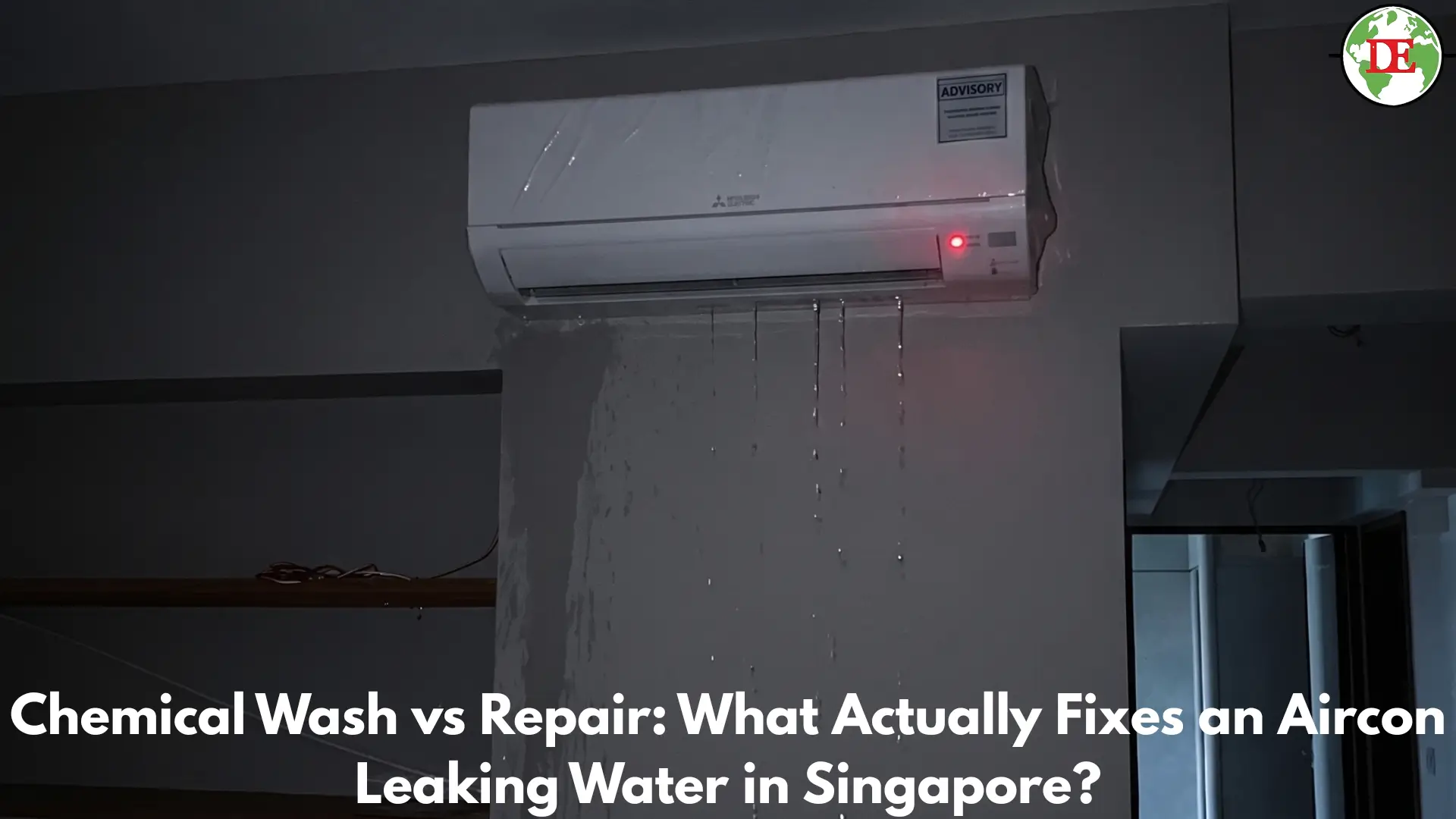
A Hydro Service can fix a leaking aircon if the leak is caused by severe dirt, mold, or algae buildup on the fan coil and drain pan. However, if the leak is due to a cracked pan, poor pipe gradient, or worn-out insulation, a mechanical repair or pipe replacement is needed instead.
Aircon dripping down your wall. The first contractor you call, without even looking at the unit, says over the phone: https://decom-aircon.com.sg\ \https://decom-aircon.com.sg\ –dry-runAh, leaking? You need an overhaul. $150.https://decom-aircon.com.sg\ \https://decom-aircon.com.sg\ –dry-run
Not all leaks are created equal. Throwing harsh chemicals at a machine won’t fix a broken pipe, and a basic water flush won’t solve a deeply rusted drain pan. Here’s how to tell exactly which fix you need before anyone sends you an invoice.
Not All Leaks Require the Same Fix
Think of your aircon like the plumbing in your bathroom. If the sink is clogged with hair, you use a plunger (standard servicing). If the pipes are lined with hardened grime, you use a drain cleaner (Hydro Service). If the pipe itself is cracked, you replace the pipe (overhaul). Applying the wrong solution means throwing money away while water continues to damage your parquet flooring and HDB plaster.
Standard Servicing & Drainage Flush
Singapore’s extreme humidity creates heavy condensation inside your unit. Over time, condensation mixes with dust and organic debris to form thick, translucent, brownish sludge – what technicians call https://decom-aircon.com.sg\ \https://decom-aircon.com.sg\ –dry-runaircon jelly.https://decom-aircon.com.sg\ \https://decom-aircon.com.sg\ –dry-run It slowly builds up and acts like a cork, blocking the PVC drainage pipe. Water backs up and overflows the internal drain pan.
If your aircon is relatively new and receives regular maintenance, this is almost always the culprit.
The fix
No chemicals needed. A technician performs a standard general servicing cleaning filters, wiping the casing, and using a high-powered industrial wet vacuum to clear the drainage exit. The vacuum physically pulls the jelly out, restoring normal flow.
Aircon Hydro Service
If you haven’t serviced your unit in over a year, or live near an expressway with heavy dust and exhaust, dirt can bypass your filters and bake directly onto the delicate aluminum fins of the fan coil. This severely restricts airflow, causing the evaporator coils to freeze into a block of ice. When the unit is turned off, that ice melts rapidly overwhelming the drain pan and flooding your room.
The fix
A Hydro Service is necessary. The technician partially strips the unit, isolating the fan coil and drain pan, then applies an alkaline-based chemical solution that foams up and actively dissolves hardened grime, bacteria, and mold. This resets internal airflow to near-factory conditions, stopping the freeze-and-flood cycle.
Not sure if you need a Hydro Service or a simple drainage flush? Send Decom Aircon a video on WhatsApp → We’ll assess it for free.
Hydro Overhaul
If your aircon sounds like a sputtering engine, blows warm air, and spits water simultaneously, a standard Hydro Service won’t reach the deepest problems. The technician pumps down the refrigerant gas, completely dismantles the indoor fan coil unit from the wall, and flushes every component individually.
This is the only time a technician can properly inspect internal hardware for structural damage. A cracked drain pan warped after years of hot and cold temperature swings cannot be cleaned back to health. It must be replaced.
The fix
A full overhaul plus drain pan replacement, where needed. Replacing a cracked pan during an overhaul can extend the lifespan of the unit by 3 to 5 years. No amount of chemical cleaning will seal a physical crack.
Pipe Insulation Replacement
Here’s what most contractors won’t tell you: sometimes the leak isn’t coming from the aircon unit at all. If water is forming like sweat along the long plastic trunking running across your ceiling not dripping from the unit itself that’s a completely different problem.
Inside that plastic trunking are freezing cold copper pipes carrying refrigerant. If the original installer used cheap thin insulation, or if the foam has degraded over 5 to 10 years, the cold copper meets Singapore’s warm, humid air and produces heavy condensation that drips right through the trunking.
The fix
Open the trunking, strip the degraded foam, and re-wrap the copper pipes. We recommend 1/2 inch Armaflex insulation for Singapore’s climate thicker than the standard 3/8 inch to permanently stop condensation leaks. No hydro wash required.
The Decision Matrix
Match your symptoms to the right fix before calling anyone.
| What you see / hear | Root cause | Right fix |
|---|---|---|
| Water dripping from indoor unit, unit is relatively clean | Jelly blocking the PVC pipe | Standard Servicing |
| Water dripping + musty smell + weak airflow | Choked fan coil causing ice buildup | Hydro Service |
| Leaking + 5+ year old unit + loud motor noises | Deep mold or cracked drain pan | Hydro Overhaul |
| Water dripping along trunking on wall/ceiling | Degraded copper pipe insulation | Insulation Replacement |
Frequently asked questions
Stop guessing. Get the diagnosis right.
Whether it’s a 30-minute vacuum or a full overhaul, Decom Aircon gives you a clear answer before any work begins. Decom Aircon provides Complete House & Office Relocation Services
Leave a Reply